Encumbrance Certificate for Plot Purchase: Why Every Buyer Must Verify EC
Learn why an encumbrance certificate for plot purchase is important, what EC shows, what it does not show, and how plot buyers can verify it safely.

Table of Contents
Encumbrance Certificate for Plot Purchase: Why Every Buyer Must Verify EC
Encumbrance Certificate for Plot Purchase is one of the most important legal checks every buyer should complete before investing in a residential plot, open plot, or gated community plot. A plot may look perfect on-site, the location may seem promising, and the price may appear attractive, but the registered history of the land must still be verified carefully.
An Encumbrance Certificate, commonly called EC, helps buyers understand whether a property has registered transactions or financial liabilities during a selected period. It can show sale transactions, mortgage entries, gift deeds, release deeds, and other registered records connected with the property. For a plot buyer, this makes EC an important part of the legal verification process.
Many buyers check layout approval, plot size, facing, and road width, but they do not always study the EC properly. That can be risky. A property may have a good location but still carry a registered loan, dispute-related entry, or unclear transaction history. This guide explains what an EC means, why it matters, how to read it, and what buyers should verify before making a payment.
Quick Summary
- An encumbrance certificate helps buyers review registered transactions linked to a property.
- EC may show sale deeds, mortgages, gift deeds, release deeds, and other registered entries.
- EC is important, but it does not replace title verification, layout approval, or legal opinion.
- Buyers should verify the correct survey number, plot number, village, SRO, and time period.
- A nil EC does not automatically mean the property is completely risk-free.
- EC should be reviewed with title deed, sale deed, link documents, approval papers, and site verification.
- Professional legal advice is strongly recommended before registration.
Table of Contents
- What Is an Encumbrance Certificate?
- Why EC Is Important Before Buying a Plot
- What Information Does an EC Show?
- What an EC Does Not Show
- How to Check EC for Property in Telangana
- How to Read an Encumbrance Certificate
- Common Mistakes Buyers Make With EC
- Red Flags in Encumbrance Certificate Verification
- EC Verification Checklist for Plot Buyers
- Frequently Asked Questions
- Final Thoughts
What Is an Encumbrance Certificate?
An Encumbrance Certificate is a document that records registered transactions linked to a property for a specific period. In simple words, it helps a buyer check whether the property has any registered financial or legal burden during the period searched.
The word encumbrance means a claim, charge, liability, or restriction that can affect ownership or transfer. For example, if a landowner has mortgaged the property to a bank, that mortgage may appear in the EC if it was registered. If the property was sold earlier, that sale transaction may also appear.
For a plot buyer, an EC is useful because it gives a trace of registered activity. It does not tell the full legal story of the land, but it gives important clues. That is why EC should be treated as one part of a larger property verification process.
Did You Know? Many buyers ask whether a property has a clear title, but they do not ask for an updated EC. A clear title and a clean transaction history should both be checked before buying a plot.
Why EC Is Important Before Buying a Plot
The encumbrance certificate for plot purchase is important because land transactions usually involve large financial commitments. Once you pay the booking amount, sign an agreement, or proceed with registration, reversing the decision can become difficult.
EC helps buyers identify whether the property has a registered mortgage, prior sale, gift, settlement, release, or other transaction. If the seller claims full ownership but the EC shows a mortgage or another transaction, the buyer should pause and verify before proceeding.
EC is especially useful for first-time plot buyers, NRIs, families investing savings, and investors comparing multiple open plot projects. It helps them move from assumption to verification.
Before buying a plot, buyers should use EC along with title deed, sale deed, link documents, approved layout plan, survey number details, seller identity documents, agreement of sale, and legal opinion.
If you are still building your legal understanding, read our guides on Documents Required Before Buying a Plot in Telangana and How to Verify Land Ownership Before Buying a Plot.
What Information Does an EC Show?
An EC usually shows registered transactions connected with a property during the selected search period. The exact format can vary, but buyers commonly review EC for property description, survey number, plot details, village details, document numbers, registration dates, party names, transaction type, Sub-Registrar Office details, and consideration value where available.
For buyers, the most important point is consistency. The survey number, extent, boundaries, and ownership chain should match the sale deed, link documents, and approved layout. If the EC shows details that do not match other documents, the matter should be clarified before payment.

What an EC Does Not Show
This is one of the most important sections for buyers. An EC is useful, but it is not a complete guarantee of ownership. Many buyers assume that if EC is clean, the property is fully safe. That assumption can be dangerous.
An EC may not show unregistered agreements, informal family disputes, oral claims, possession-related issues, boundary disputes not registered, errors in revenue records, pending issues not reflected in registration records, forged documents unless already recorded through legal process, or government restrictions that require separate verification.
A nil EC simply means no registered encumbrance was found during the searched period based on the details provided. It does not automatically confirm clear title, layout approval, land use, or physical possession.
Expert Advice: Treat EC as a strong supporting document, not as the only proof. A safe plot purchase requires EC, title verification, link document review, survey confirmation, layout approval check, and physical site inspection.
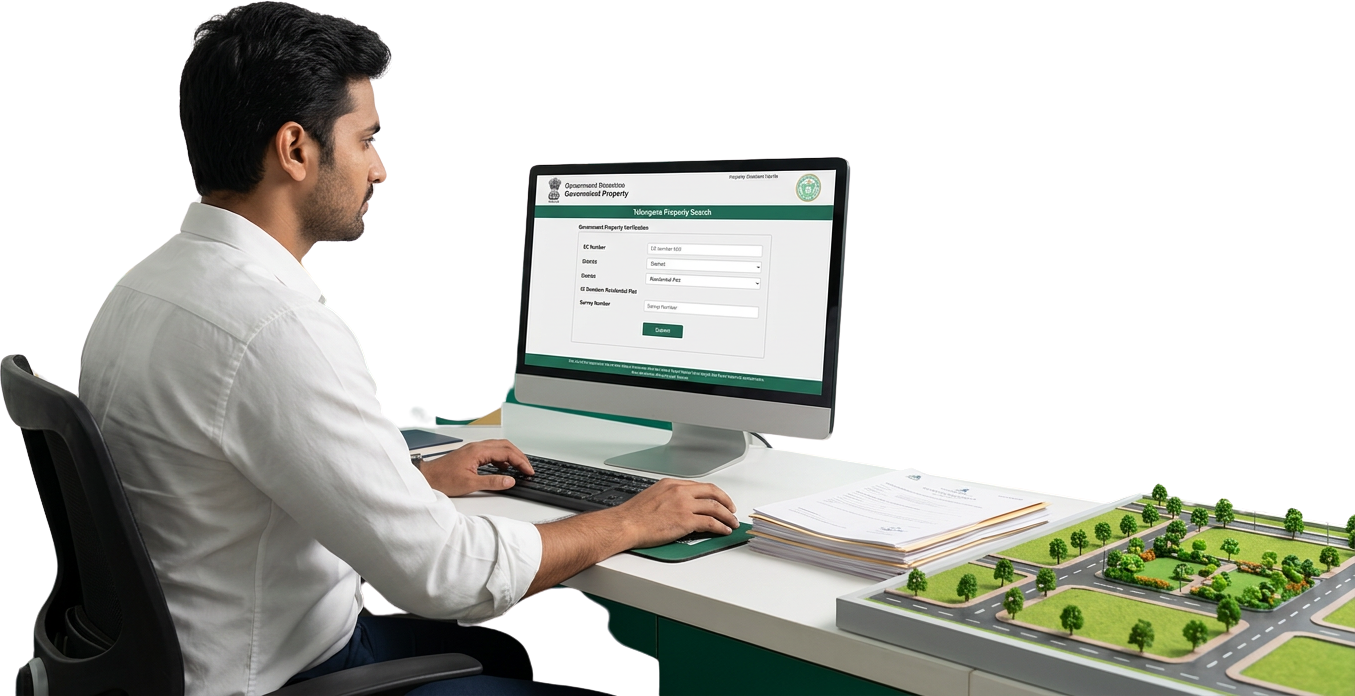
How to Check EC for Property in Telangana
Buyers in Telangana can refer to official government resources such as the Telangana Registration and Stamps Department for registration-related services and property document information. Buyers can also refer to the Telangana State Portal for government services and updates.
When checking EC, make sure the search is done using accurate property details. A small mismatch in survey number, plot number, village, mandal, or SRO details can produce incomplete or misleading results.
- District
- Sub-Registrar Office
- Village or locality
- Survey number
- Plot number, if applicable
- Document number, if available
- Registration year, if available
- Owner name, where required
- Search period
For serious purchases, buyers should not depend only on a screenshot or a forwarded PDF. Ask for a complete EC and cross-check it with original property documents and legal advice.
How to Read an Encumbrance Certificate
Reading an EC requires patience. Do not only check whether it says nil or shows entries. Study the details line by line and compare them with the property documents.
Start with the property description. Check whether the survey number, plot number, extent, and location match the land you are planning to buy. Then review the transaction entries. Look at the document number, registration date, party names, and nature of the transaction.
- Does the property description match the sale deed?
- Does the survey number match the layout and title documents?
- Are the seller's rights visible through registered documents?
- Are there any mortgage entries?
- If there was a mortgage, is there a release deed?
- Are there unexpected transactions?
- Does the ownership chain appear logical?
- Is the search period long enough?
If you are unsure how to interpret entries, consult a property lawyer. A wrong assumption about EC can lead to serious financial and legal issues later.
Common Mistakes Buyers Make With EC
Many buyers ask for EC only because someone told them it is required. They receive it, see a few official-looking entries, and assume everything is fine. That is not enough.
- Checking EC for a very short period only
- Not verifying the correct survey number
- Depending on an old EC
- Not comparing EC with link documents
- Ignoring mortgage entries
- Assuming nil EC means clear title
- Not checking whether mortgage release is registered
- Accepting unclear photocopies
- Not involving a legal professional
- Failing to verify the SRO and property location details
A smart buyer should use EC as part of a complete legal due diligence process. To understand the broader buying process, read our Plot Buying Checklist.
Red Flags in Encumbrance Certificate Verification
Some EC-related warning signs should not be ignored. If you notice any of these, slow down and verify before moving forward.
- Seller avoids sharing updated EC
- EC search period is too short
- Survey number does not match the sale deed
- Mortgage appears but release deed is missing
- Names in EC do not match the ownership chain
- Property extent is inconsistent
- Unexpected gift, settlement, or release entries appear
- Multiple transactions are not explained clearly
- Seller discourages legal verification
- Documents are shared only after payment demand
These signs do not always mean the property is unsafe, but they do mean the buyer must ask questions. A genuine transaction should allow time for document review.
EC Verification Checklist for Plot Buyers
Use this checklist before buying a plot:
- Ask for an updated EC before payment
- Check the correct survey number and plot number
- Verify the right village, mandal, district, and SRO
- Review the EC search period
- Compare EC with sale deed and title deed
- Check whether seller name matches ownership records
- Look for mortgage, loan, or charge entries
- Confirm release deed if a mortgage existed
- Compare EC with link documents
- Check property extent and boundaries
- Review layout approval separately
- Take legal opinion before signing agreement
How This Guide Connects With Your Buying Journey
This article is part of the Sri Supraja Infracon Investor Knowledge Center. If you are learning about land documents, continue reading these related guides:
- Common Mistakes to Avoid When Buying a Plot
- Documents Required Before Buying a Plot in Telangana
- Sale Deed vs Title Deed
- HMDA vs DTCP vs RERA
If you are exploring transparent plotted developments, you can also review Sri Supraja Infracon projects and growth-focused communities such as Supraja IRIS.
Frequently Asked Questions
What is an encumbrance certificate?
An encumbrance certificate is a document that shows registered transactions connected with a property during a selected period. It may show sale, mortgage, gift, release, and other registered entries.
Why is EC important before buying a plot?
EC helps buyers check whether the property has registered financial or legal liabilities. It is an important part of plot legal verification before payment or registration.
Does a nil EC mean the property is safe?
Not always. A nil EC means no registered encumbrance was found for the searched period based on the given details. It does not replace title verification, approval checks, or legal opinion.
How many years of EC should I check?
The search period depends on the property history and legal advice. Many buyers prefer a long search period to understand the transaction chain better, especially for land purchases.
Can EC show a bank loan on property?
If the mortgage or charge was registered, it may appear in EC. If there was a registered mortgage, buyers should also check whether a proper release deed has been registered.
Is EC enough to prove ownership?
No. EC is not enough by itself. Buyers should also verify title deed, sale deed, link documents, layout approval, survey number, seller identity, and legal opinion.
Should I check EC before paying booking amount?
Yes. It is safer to review EC and other important documents before paying any major amount or signing an agreement.
Where can I check EC in Telangana?
Buyers can refer to the Telangana Registration and Stamps Department website and consult a legal professional for proper document verification.
Final Thoughts on Encumbrance Certificate for Plot Purchase
Understanding the encumbrance certificate for plot purchase helps buyers make safer and more informed decisions. EC gives valuable information about registered transactions and possible liabilities, but it should never be treated as the only document required for property verification.
A safe plot purchase requires a complete review of ownership documents, link documents, survey number, layout approval, site conditions, and registration records. Buyers should also take professional legal advice before signing an agreement or paying a major amount.
For buyers looking at planned plotted developments, Sri Supraja Infracon focuses on transparency, documentation clarity, and long-term investor confidence. You can explore our projects or connect with our team for guidance on your next property decision.
Explore Premium Projects
Related Blogs
Sale Deed vs Title Deed: What's the Difference When Buying a Plot?
Sale deed and title deed are often used together, but they do not mean the same thing. This guide explains the difference, why both matter, and what buyers should verify before purchasing a plot.
Plot Registration Process in Telangana: Step-by-Step Guide (2026)
Understand the plot registration process in Telangana with this practical step-by-step guide covering documents, sale deed preparation, registration charges, SRO visit, biometric verification, and buyer checklist.
How to Verify Land Ownership Before Buying a Plot
Before buying any plot, the most important step is confirming who legally owns the land. This guide explains how to verify land ownership before buying a plot through title deed, sale deed, encumbrance certificate, survey number, revenue records, and physical verification.
Looking for DTCP & RERA Approved Plots?
Explore premium plotted developments by Sri Supraja Infracon across Hyderabad growth corridors.