Sale Deed vs Title Deed: What's the Difference When Buying a Plot?
Understand sale deed vs title deed before buying a plot. Learn the key differences, legal importance, ownership proof, registration role, and buyer checklist.

Table of Contents
Sale Deed vs Title Deed: What's the Difference When Buying a Plot?
Sale deed vs title deed is one of the most important legal differences every plot buyer should understand before making a property investment. Many buyers use these two terms as if they mean the same thing, but they serve different purposes in a property transaction.
A sale deed records the transfer of ownership from seller to buyer. A title deed refers to the broader legal proof of ownership and the ownership history of the property. In simple terms, the sale deed is usually one of the most important documents that helps establish title, but the title itself is the legal right of ownership over the land.
When buying a residential plot, open plot, or gated community plot, understanding the difference can help you ask better questions, review documents carefully, and avoid common legal mistakes. This guide explains what each document means, why both matter, and how buyers can verify them before registration.
Quick Summary
- A sale deed is a registered legal document that transfers property ownership from seller to buyer.
- A title deed is not always one single document. It refers to documents that prove legal ownership and ownership history.
- The sale deed helps establish the buyer's ownership after registration.
- Clear title means the seller has valid legal rights to sell the plot.
- Buyers should verify the sale deed, link documents, encumbrance certificate, survey number, and approved layout before purchase.
- Do not rely only on a current sale deed. Check the complete ownership chain.
- A property lawyer can help identify title gaps, missing link documents, and risky clauses.
Table of Contents
- Why Buyers Confuse Sale Deed and Title Deed
- What Is a Sale Deed?
- What Is a Title Deed?
- Sale Deed vs Title Deed: Key Differences
- Which Document Proves Ownership?
- Documents to Check Along With Sale Deed and Title Deed
- Red Flags Buyers Should Watch For
- Buyer Checklist Before Signing a Sale Deed
- Frequently Asked Questions
- Final Thoughts
Why Buyers Confuse Sale Deed and Title Deed
Most buyers hear the words sale deed and title deed during document verification, registration discussions, or legal review. Since both are connected to ownership, it is easy to assume that they are the same. This confusion is common among first-time plot buyers, NRIs, and even experienced investors who have not personally handled registration paperwork.
The simplest way to understand the difference is this: a sale deed is a specific document used to transfer property. Title is the legal ownership right over that property. A title deed or title documents are the documents that help prove that right.
For example, when you buy a plot, the registered sale deed in your name becomes a key ownership document. But before you buy, you must verify whether the seller has clear title. That means checking how the seller got the land, whether previous transfers were valid, and whether there are any claims or encumbrances on the property.
Did You Know? A buyer may receive a registered sale deed after purchase, but if the seller did not have clear title, the buyer can still face legal complications later. Registration alone should not replace proper title verification.
What Is a Sale Deed?
A sale deed is a legal document that records the sale and transfer of property from one person or entity to another. In a plot transaction, it usually contains the names of the seller and buyer, property description, sale consideration, payment details, survey number, boundaries, registration details, and conditions of transfer.
Once a sale deed is executed and registered with the appropriate registration authority, it becomes an important proof that the buyer has purchased the property. For most buyers, the sale deed is the document they receive after registration and preserve as the primary ownership record.
A properly drafted sale deed should clearly mention:
- Full details of buyer and seller
- Plot number and survey number
- Extent of land and boundaries
- Sale value and payment confirmation
- Previous ownership reference
- Registration office details
- Possession handover terms
- Seller declaration that the property is free from undisclosed claims
- Signatures of parties and witnesses
Before signing a sale deed, buyers should read every clause carefully. Small mistakes in names, survey numbers, plot numbers, extent, or boundaries can create problems during resale, mutation, or future development.

What Is a Title Deed?
A title deed is commonly understood as a document or set of documents that proves ownership of a property. In practical real estate language, title refers to the legal right to own, use, and transfer the property. A title deed helps prove that right.
Unlike a sale deed, title is not always represented by only one document. It may be supported by a chain of documents such as past sale deeds, gift deeds, partition deeds, inheritance documents, release deeds, court orders, revenue records, and other ownership records.
When a lawyer says the title is clear, it generally means the ownership chain appears legally valid, the seller has the right to sell, and there are no obvious claims or defects based on the documents reviewed.
For plot buyers, title verification usually includes checking:
- How the seller acquired the land
- Whether previous transfers were properly registered
- Whether link documents are complete
- Whether ownership names match across records
- Whether any family, inheritance, or partnership claim exists
- Whether the land is free from registered encumbrances
- Whether survey number and extent are consistent
A clear title is especially important for open plots because land disputes often arise from unclear ownership history, boundary confusion, inheritance claims, or missing link documents.
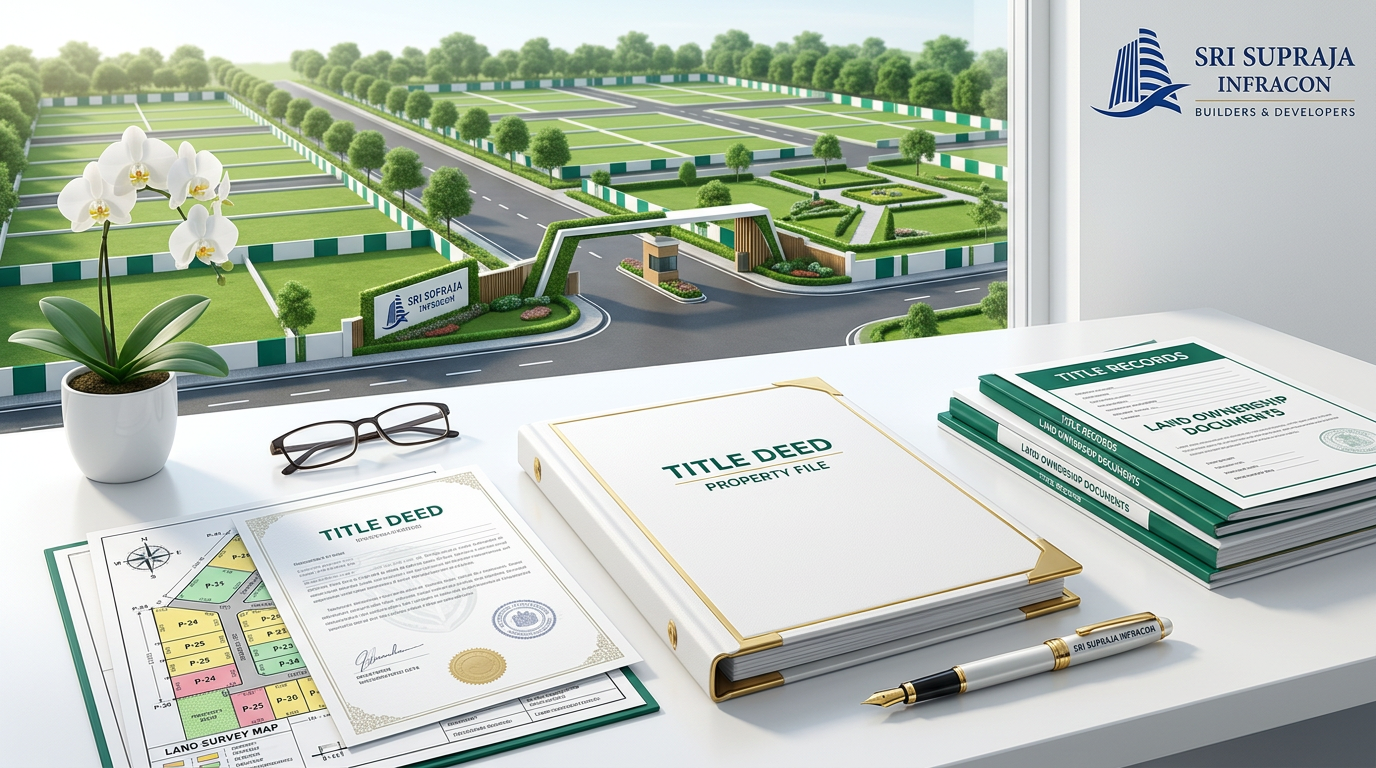
Sale Deed vs Title Deed: Key Differences
The difference between sale deed and title deed becomes clearer when you compare their purpose. A sale deed is about transfer. A title deed or title documents are about ownership proof.
| Point of Difference | Sale Deed | Title Deed |
|---|---|---|
| Main purpose | Transfers ownership from seller to buyer | Proves legal ownership and ownership history |
| When it is used | During property sale and registration | During ownership verification and legal due diligence |
| What it confirms | That sale transaction has happened | That ownership rights are valid and traceable |
| Is it one document? | Yes, usually a specific registered document | May include several documents forming the ownership chain |
Both are important. A buyer should not ask which one matters more. Instead, the right approach is to verify the title before registration and ensure the sale deed is correctly drafted and registered during the transaction.
Which Document Proves Ownership?
After registration, the registered sale deed in the buyer's name becomes a key proof of ownership. However, ownership confidence depends on whether the seller had clear title before selling the property.
This is where many buyers make a mistake. They think registration automatically solves every legal issue. Registration records the transaction, but it does not independently guarantee that the seller had perfect title. If the ownership chain has defects, disputes may still arise later.
For safer plot investment, buyers should look at ownership in two stages:
- Before purchase: Verify the seller's title, link documents, encumbrance certificate, survey number, and layout approval.
- During purchase: Ensure the sale deed correctly records the transaction and is registered properly.
This two-stage approach gives buyers stronger protection. It also makes the plot easier to resell, transfer, or develop in the future.
Expert Advice: Do not treat a sale deed as a shortcut for title verification. First verify that the seller has the right to sell. Then ensure the sale deed transfers that right to you clearly and legally.
Documents to Check Along With Sale Deed and Title Deed
Sale deed and title documents should never be checked alone. A strong property verification process looks at the complete document set. This is especially important when buying a plot in Telangana, where buyers may be comparing approved layouts, developing locations, and multiple project options.
Important documents to review include:
- Current sale deed
- Previous sale deeds and link documents
- Title deed or ownership documents
- Encumbrance certificate
- Approved layout plan
- Survey number details
- Plot number and extent confirmation
- Revenue records where applicable
- Mutation records where applicable
- Property tax or payment receipts where applicable
- Seller identity and authorization documents
- Power of attorney if someone is signing on behalf of the owner
- Agreement of sale before final registration
For a deeper checklist, read Documents Required Before Buying a Plot in Telangana. If you are still in the early research stage, start with Plot Buying Checklist and Common Mistakes to Avoid When Buying a Plot.
Buyers can also refer to official resources such as the Telangana Registration and Stamps Department and Telangana RERA where applicable. These resources should be used along with professional legal advice.
Common Misconceptions About Sale Deed and Title Deed
Misunderstanding these documents can lead buyers into risky decisions. Here are some common misconceptions:
Misconception 1: Sale Deed and Title Deed Are the Same
They are related but not the same. A sale deed transfers ownership through a sale transaction. Title refers to the legal ownership right and the documents that support that right.
Misconception 2: Registration Means There Can Be No Dispute
Registration is important, but it does not remove every possible title issue. If there are hidden claims, missing link documents, or ownership disputes, the buyer may still face problems.
Misconception 3: Only the Latest Document Is Enough
The latest sale deed is important, but buyers should also verify the ownership chain. Link documents help explain how the property moved from one owner to another.
Red Flags Buyers Should Watch For
When reviewing sale deed and title deed documents, buyers should slow down if anything feels unclear. A genuine seller or developer should be able to provide proper documents and explain them transparently.
Watch for these warning signs:
- Seller avoids sharing previous ownership documents
- Only photocopies are shown and originals are not available for verification
- Survey number differs across documents
- Plot extent or boundaries are inconsistent
- Encumbrance certificate shows unexpected transactions
- Power of attorney is unclear or outdated
- Names do not match across records
- Seller discourages legal review
- Agreement terms differ from verbal promises
- Payment is requested before document verification
One red flag does not always mean the transaction is unsafe, but it does mean the buyer should pause, ask questions, and get professional legal guidance.
Did You Know? Many property disputes are not caused by the plot itself, but by unclear ownership history. A clean location cannot compensate for weak documentation.
Buyer Checklist Before Signing a Sale Deed
Use this practical checklist before signing or registering a sale deed:
- Verify seller ownership and identity
- Check title deed and ownership chain
- Review all link documents
- Check encumbrance certificate for the required period
- Confirm survey number and plot number
- Compare plot boundaries with documents
- Review approved layout plan
- Confirm payment terms and sale consideration
- Read possession and handover clauses
- Check whether any power of attorney is involved
- Confirm all verbal commitments are written
- Take legal opinion before registration
- Keep copies of payment receipts
- Verify registration details after completion
How This Guide Connects With Your Buying Journey
This article is part of the Sri Supraja Infracon Investor Knowledge Center. If you are learning about legal documents in order, continue with these guides:
- How to Verify Land Ownership Before Buying a Plot
- Plot Registration Process in Telangana
- HMDA vs DTCP vs RERA
- Documents Required Before Buying a Plot in Telangana
If you are evaluating planned plotted developments, you can also explore Sri Supraja Infracon projects and growth-focused communities such as Supraja IRIS.
Frequently Asked Questions
Is sale deed the same as title deed?
No. A sale deed records the transfer of ownership from seller to buyer. Title deed or title documents prove ownership rights and ownership history. They are related, but they are not exactly the same.
Which is more important, sale deed or title deed?
Both are important. Buyers should verify clear title before purchase and ensure the sale deed is properly drafted and registered during the transaction.
Does a sale deed prove ownership?
A registered sale deed is a key proof of ownership after purchase. However, ownership confidence also depends on whether the seller had clear title before the sale.
What documents support clear title?
Clear title may be supported by sale deeds, link documents, encumbrance certificate, partition deed, gift deed, inheritance documents, release deed, revenue records, and other ownership documents depending on the case.
Should I check link documents before buying a plot?
Yes. Link documents show the ownership chain. They help verify how the land moved from previous owners to the current seller.
Can I register a plot without checking title?
It is risky. Registration may happen, but if the seller's title is defective, the buyer may face legal issues later. Title verification should happen before registration.
Should I take legal advice before signing a sale deed?
Yes. A property lawyer can review title documents, sale deed clauses, survey details, encumbrance records, and agreement terms before you commit.
Final Thoughts on Sale Deed vs Title Deed
Understanding sale deed vs title deed helps buyers move through the plot purchase process with more clarity. A sale deed is the legal document that records transfer through sale. Title deed or title documents help prove ownership and establish the legal right to sell or own the property.
Before buying a plot, do not look at only one document. Review the complete ownership chain, check the encumbrance certificate, verify survey numbers, compare the approved layout, and ensure the sale deed is drafted correctly. A few careful checks before registration can protect your investment for years.
For buyers exploring transparent and thoughtfully planned plotted developments, Sri Supraja Infracon focuses on documentation clarity, location potential, and investor confidence. You can explore our projects or connect with our team for guidance on your next property decision.
Explore Premium Projects
Related Blogs
Plot Registration Process in Telangana: Step-by-Step Guide (2026)
Understand the plot registration process in Telangana with this practical step-by-step guide covering documents, sale deed preparation, registration charges, SRO visit, biometric verification, and buyer checklist.
How to Verify Land Ownership Before Buying a Plot
Before buying any plot, the most important step is confirming who legally owns the land. This guide explains how to verify land ownership before buying a plot through title deed, sale deed, encumbrance certificate, survey number, revenue records, and physical verification.
HMDA vs DTCP vs RERA: Which Approval Matters When Buying a Plot?
Before buying a plot, every buyer should understand the difference between HMDA approval, DTCP approval, and RERA registration. This guide explains what each one means and how to verify approvals safely.
Looking for DTCP & RERA Approved Plots?
Explore premium plotted developments by Sri Supraja Infracon across Hyderabad growth corridors.