Plot Buying Checklist: 20 Things Every Buyer Should Verify Before Investing
Use this plot buying checklist to verify legal documents, location, approvals, infrastructure, developer credibility, and costs before buying land.

Table of Contents
Plot Buying Checklist: 20 Things Every Buyer Should Verify Before Investing
A Plot Buying Checklist is one of the most useful tools for anyone planning to buy land. Whether you are a first-time buyer, a salaried professional, an NRI, or a long-term investor, a clear checklist helps you move beyond emotions and evaluate the property with confidence.
Buying a plot is different from buying a ready apartment. There is no finished building to inspect, so the real value sits in the location, legal documents, layout planning, approvals, infrastructure, road access, and future development potential. Missing even one important step can lead to delays, disputes, unexpected costs, or weak resale value.
This guide from Sri Supraja Infracon gives you a practical residential plot buying checklist that you can use before booking a plot, paying an advance, or completing registration.
Quick Summary
- A checklist before buying open plots helps you verify the investment properly.
- Legal documents, layout approvals, and ownership records should be checked before payment.
- Location growth, road connectivity, and surrounding development directly affect future value.
- Infrastructure such as internal roads, water, electricity, drainage, and street lights must be evaluated.
- Developer credibility is as important as the land itself.
- Total cost should include registration, maintenance, legal checks, and future planning.
Table of Contents
- Why Every Buyer Needs a Plot Buying Checklist
- Legal Checklist for Buying Land
- Location Checklist Before Buying a Plot
- Infrastructure Checklist for Residential Plots
- Developer Verification Checklist
- Financial Checklist Before Investing in a Plot
- Site Visit Checklist
- Red Flags You Should Never Ignore
- 20-Point Plot Buying Checklist
- Frequently Asked Questions
- Final Thoughts
Why Every Buyer Needs a Plot Buying Checklist
Most buyers compare price, plot size, and payment plans first. Those points are important, but they are only part of the decision. A safe plot purchase needs a more systematic approach.
A plot buying checklist before investing helps you ask the right questions at the right time. It prevents rushed decisions, reduces dependency on verbal promises, and gives you a clear method to compare different projects.
Imagine finding a plot that fits your budget and looks attractive on the brochure. The location sounds promising, the offer period is limited, and the sales team says the price may increase soon. Everything feels urgent. But if you have not checked the title, approval status, road access, and surrounding development, the decision is incomplete.
A proper land investment checklist helps you slow down, verify facts, and invest with confidence.
Did You Know?
Many buyers spend more time negotiating the price than reviewing property documents. A few hours spent on verification before booking can prevent months of stress later.
Legal Checklist for Buying Land
Legal verification is the foundation of any safe land purchase. If the title is unclear or approvals are missing, even a good-looking plot can become a difficult investment.
The legal checklist for buying land should begin before you pay a major amount. Booking a plot without reviewing basic documents is one of the most common mistakes buyers make.
1. Verify the Title Deed
The title deed confirms ownership. It helps establish whether the seller or developer has the legal right to sell the property. A clean title is essential for peaceful ownership and future resale.
2. Check the Sale Deed and Link Documents
Link documents show how ownership has moved from one person or entity to another over time. These documents help identify gaps, disputes, or missing ownership history.
3. Review the Encumbrance Certificate
An Encumbrance Certificate helps identify whether there are any registered financial liabilities, mortgages, or legal claims on the property for a given period.
4. Confirm Layout Approval
For plotted developments, layout approval is extremely important. It indicates whether the layout has been planned and processed as per applicable rules. Buyers should ask for approval copies and understand what exactly has been approved.
5. Check Survey Number and Boundaries
The survey number connects the plot to official land records. It is also important to verify whether the physical plot location matches the approved layout and survey details.

For property-related information, buyers may refer to official resources such as the Telangana Registration and Stamps Department and Telangana RERA.
Location Checklist Before Buying a Plot
Location is one of the biggest drivers of land appreciation. A strong location does not always mean the center of the city. In many cases, emerging corridors with planned infrastructure can offer better long-term potential.
When using a plot verification checklist, study both the present condition and future growth direction of the area.
6. Check Road Connectivity
Good road access improves convenience, resale demand, and future development potential. Check the approach road, internal roads, distance from highways, and access to important nearby locations.
7. Study Nearby Growth Drivers
Educational institutions, industrial zones, IT hubs, tourism projects, commercial centers, and large infrastructure developments can influence future demand.
8. Check Social Infrastructure
Schools, colleges, hospitals, daily needs, banks, and transport facilities make a location more practical for future residents and end-users.
9. Understand the Future of the Corridor
A location that is developing steadily may offer stronger long-term value than an area that has already reached high pricing. The goal is to identify growth before it becomes obvious to everyone.
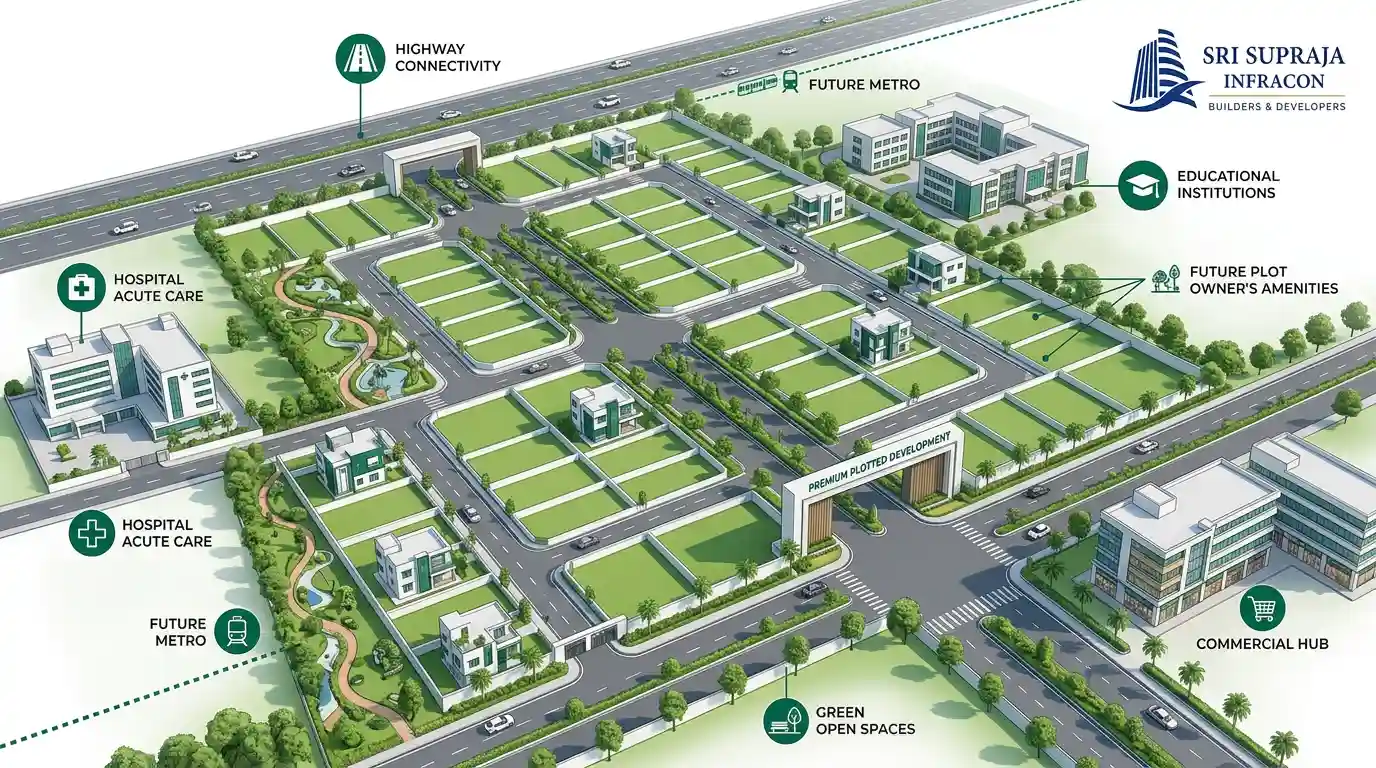
Infrastructure Checklist for Residential Plots
A residential plot buying checklist must include infrastructure. Good infrastructure makes a plotted development more usable, organized, and attractive to future buyers.
Do not judge a project only by entrance design or marketing visuals. Check what is actually available, what is under development, and what is promised in writing.
10. Internal Roads and Plot Demarcation
Well-planned internal roads improve movement within the layout. Clear plot marking helps avoid confusion during possession, resale, or future construction.
11. Water, Electricity, and Drainage
Basic utilities matter. Ask about water arrangements, electricity access, drainage planning, street lighting, and future maintenance.
12. Green Spaces and Community Planning
Open areas, landscaping, and organized planning improve the overall experience of a plotted community. These features also support long-term appeal.
Expert Tip:
Do not evaluate infrastructure only on paper. During your site visit, observe road levels, drainage direction, plot boundaries, and the quality of ongoing development.
Developer Verification Checklist
The developer's credibility can influence your entire buying experience. A reliable developer provides better clarity, documentation support, infrastructure planning, and post-sale assistance.
13. Review Completed Projects
Completed projects show execution ability. They also help buyers understand the developer's planning standards, finishing quality, and customer approach.
14. Check Transparency in Communication
A trustworthy developer answers questions clearly, shares documentation, explains payment terms, and avoids pressure-based selling.
15. Understand After-Sales Support
Buying a plot does not end with payment. Registration support, possession clarity, maintenance communication, and documentation guidance matter after booking as well.
Sri Supraja Infracon focuses on planned developments, transparent guidance, and long-term investor confidence. You can explore current plotted developments on the Sri Supraja Infracon projects page.
Financial Checklist Before Investing in a Plot
A safe plot buying guide should always include financial planning. Many buyers calculate the basic plot price but miss additional costs.
16. Calculate Total Cost
Total cost may include plot price, registration charges, taxes, maintenance charges, legal verification, development charges if applicable, and future construction planning.
17. Understand Payment Terms
Before booking, clearly understand the booking amount, payment schedule, cancellation terms, registration timeline, and any conditions linked to promotional pricing.
18. Plan for Future Construction
If you are buying for future home construction, check the plot size, facing, road width, setback rules, and practical building suitability.
Site Visit Checklist
A physical site visit is one of the most practical steps in the checklist before buying open plots. It helps you see what documents and marketing material cannot fully explain.
During your visit, check:
- Approach road condition
- Actual distance from known landmarks
- Nearby development activity
- Internal road formation
- Plot numbering and marking
- Land level and surroundings
- Electricity and drainage planning
- Overall project maintenance
Speak to the team at the site and ask direct questions. A genuine project team should be able to explain layout details, available plot sizes, payment terms, and documentation steps clearly.
Red Flags You Should Never Ignore
Every buyer should know when to slow down. Some warning signs may not always mean the project is wrong, but they definitely require deeper verification.
- Seller avoids sharing documents
- Layout approval details are unclear
- Ownership history is incomplete
- Pressure to book immediately without verification
- Promised appreciation sounds unrealistic
- Approach road is weak or disputed
- Payment terms are not clearly written
- Project details change during discussion
- No clear registration timeline
- Developer track record is difficult to verify
If you notice any of these issues, pause the decision and seek clarification before proceeding.
20-Point Plot Buying Checklist
Use this final checklist before investing in a residential plot or open plot:
- Verify the title deed
- Check sale deed and link documents
- Review Encumbrance Certificate
- Confirm layout approval
- Verify survey number and boundaries
- Check registration records
- Understand plot size and facing
- Visit the site personally
- Check approach road and connectivity
- Study nearby growth drivers
- Review internal roads
- Check water and electricity planning
- Review drainage and street lighting
- Understand maintenance responsibilities
- Check developer credibility
- Review completed projects
- Understand payment terms
- Calculate total investment cost
- Check resale potential
- Take legal advice before final payment
This first-time plot buyer checklist is designed to help you make a clear, practical, and informed investment decision.
Related Guides
Continue learning before you invest:
- Common Mistakes to Avoid When Buying a Plot
- Explore Supraja IRIS Resort Plots
- View Sri Supraja Infracon Projects
- Speak to Our Team
Frequently Asked Questions
What is a plot buying checklist?
A plot buying checklist is a step-by-step list used to verify legal documents, approvals, location, infrastructure, developer credibility, payment terms, and future value before investing in land.
What documents should I check before buying a plot?
Important documents include title deed, sale deed, link documents, Encumbrance Certificate, layout approval copy, survey number details, and registration records.
How do I verify a plot before buying?
You can verify a plot by checking ownership records, approval documents, survey details, physical boundaries, location access, and developer credentials. Legal advice is recommended before final payment.
Is location more important than price?
Price matters, but location often has a stronger impact on appreciation and resale demand. A low-priced plot in a weak location may not perform as well as a fairly priced plot in a growth corridor.
Should I visit the plot before booking?
Yes. A site visit helps you understand road access, surroundings, actual development status, plot markings, infrastructure, and practical usability.
Why is developer credibility important?
Developer credibility affects documentation clarity, infrastructure execution, customer support, registration assistance, and overall investment confidence.
Can first-time buyers use this checklist?
Yes. This guide is especially useful for first-time buyers because it explains the practical steps required before investing in residential plots or open plots.
Final Thoughts on Plot Buying Checklist
A Plot Buying Checklist gives buyers the confidence to make better property decisions. It helps you look beyond price and understand the full picture, including legal safety, location potential, infrastructure, developer trust, and long-term value.
Buying land can be one of the most rewarding real estate decisions when done carefully. The key is to verify before you commit. Take time to study the documents, visit the site, compare the location, understand costs, and ask clear questions.
If you are exploring well-planned plotted developments with transparent documentation and long-term growth potential, view Sri Supraja Infracon projects or connect with our team through the contact page.
Explore Premium Projects
Related Blogs
How to Verify Land Ownership Before Buying a Plot
Before buying any plot, the most important step is confirming who legally owns the land. This guide explains how to verify land ownership before buying a plot through title deed, sale deed, encumbrance certificate, survey number, revenue records, and physical verification.
HMDA vs DTCP vs RERA: Which Approval Matters When Buying a Plot?
Before buying a plot, every buyer should understand the difference between HMDA approval, DTCP approval, and RERA registration. This guide explains what each one means and how to verify approvals safely.
Documents Required Before Buying a Plot in Telangana
Before buying a plot, every buyer should verify ownership records, sale deed, link documents, encumbrance certificate, layout approval, survey number, and payment terms. This guide explains the important documents required before buying a plot in Telangana.
Looking for DTCP & RERA Approved Plots?
Explore premium plotted developments by Sri Supraja Infracon across Hyderabad growth corridors.