Plot Loan Eligibility in Hyderabad: Documents, Process and Planning Guide
Understand plot loan eligibility in Hyderabad, including income planning, commonly requested documents, own contribution and the lender process.
Table of Contents
Plot loan eligibility in Hyderabad is generally assessed by looking at two practical aspects: the applicant's repayment capacity and the details of the property being financed. Understanding both at an early stage can help buyers plan their budget, payment schedule and loan application more comfortably.
For many buyers, financing is simply one part of a larger property-purchase plan. A little preparation around income documents, own contribution and the information commonly requested by lenders can make the process more organised and predictable.
This guide explains the process in practical terms for buyers exploring residential plots in Hyderabad and Telangana. Lending policies, eligibility criteria and product terms vary between banks and housing finance companies, so the final terms will depend on the lender selected.
How Plot Loan Eligibility in Hyderabad Is Usually Assessed
Most lenders begin with the applicant's financial profile. They may consider age, occupation, monthly income, existing EMIs, repayment history, credit profile, employment or business stability and the amount the buyer plans to contribute toward the purchase.
The lender will also review information relating to the selected property. Depending on its process, this can include the allotment or sale agreement, layout information, plot and survey details, payment records and other project-related documents required for processing.
In practical terms, plot financing brings the buyer's financial eligibility and the selected property's information together within one lending process.
Income and Repayment Planning
The eligible loan amount is generally linked to the monthly repayment that can be supported after considering existing financial commitments. Salaried applicants are commonly asked for recent salary slips, bank statements and Form 16, while self-employed applicants may be asked for income-tax returns, business financials and bank statements.
Co-applicant income may also be considered by some lenders, subject to their policies. This can provide additional flexibility for eligible applicants planning a joint purchase.
It can be useful to work out a comfortable EMI from the household budget before finalising the purchase plan. This helps buyers balance the plot investment with registration expenses, future construction plans and other financial priorities.
Documents Commonly Requested for Plot Loans
The exact list varies by lender, but the application process generally includes information relating to both the applicant and the selected property. Keeping these details organised can help the application move smoothly from eligibility assessment to processing.
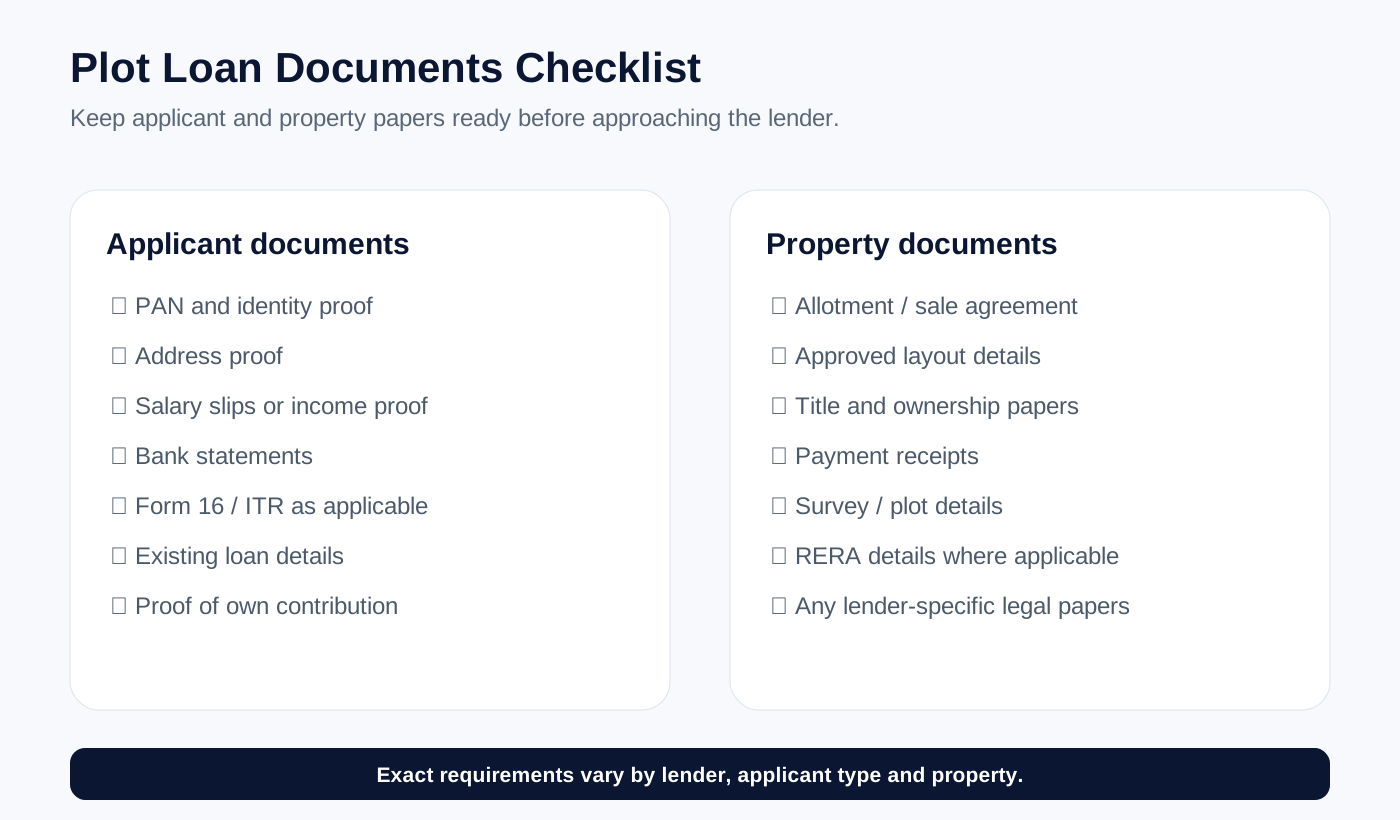
Applicant Information Commonly Requested
- PAN and acceptable identity proof
- Current and permanent address proof
- Salary slips or other income evidence
- Bank statements
- Form 16 or income-tax returns, as applicable
- Details of existing loans and EMIs
- Information about the buyer's own contribution where requested
- Co-applicant documents for joint applications
Property Information Commonly Reviewed
- Allotment letter, sale agreement or buyer agreement, as applicable
- Plot number, survey number and layout details
- Ownership and project-related documents
- Layout approval information
- Payment receipts
- RERA registration information where applicable
- Other information requested as part of the lender's standard process
Requirements can vary according to the lender, location and loan product, so the lending team can provide the exact checklist applicable to a particular application.
Plot Loan and Home Loan Are Not Always the Same Product
Buyers often use the terms plot loan, land loan and home loan interchangeably, but lenders may structure these products differently. Some products are intended for the purchase of residential land, while others combine land purchase with future house construction.
Understanding which product matches the intended use helps buyers plan the loan tenure, own contribution and future construction requirements more clearly.
When speaking with a lender, it is useful to ask which product best matches the planned purchase and whether any construction timeline, margin or other product-specific condition applies.
Planning the Own Contribution
Depending on the lender and loan product, financing may cover a portion of the property value. Buyers can therefore plan separately for their own contribution, registration-related expenses and other costs associated with the purchase.
The financing percentage and margin can vary between lenders and products. An indicative eligibility discussion at the beginning of the buying journey can provide a clearer view of the amount that may be financed and the contribution to be planned from personal funds.
This early clarity can make it easier to shortlist plots within a comfortable overall budget.
How Property Information Fits into the Lending Process
Because plot finance is secured against property, lenders normally include a legal and technical assessment as part of their standard processing. This can involve reviewing property information, layout details and valuation before disbursement.
For buyers, this is best viewed as a routine part of a structured financing process. Well-organised project information can help the lender complete its assessment efficiently.
Buyers who would like to understand the broader regulatory framework can also refer to the Telangana Real Estate Regulatory Authority website for general RERA information.
Clear Project Information Supports a Smooth Process
When layout, project and plot information is readily available, it becomes easier for buyers to share the required details with their preferred lender. A well-coordinated process between the buyer, project team and lender can reduce unnecessary back-and-forth during financing.
Buyers considering future construction may also find Telangana's official TS-bPASS portal useful for understanding the state's building permission framework and related services.
How the Plot Loan Process Usually Moves

The sequence differs between lenders, but the journey commonly moves through four broad stages. It starts with financial eligibility, followed by document submission. The lender then completes its property-related assessment, after which an eligible application can move toward sanction and disbursement according to the lender's terms.
Keeping applicant and project information ready at the beginning can make these stages easier to coordinate.
Pre-Eligibility Can Help with Budget Planning
Some lenders provide an in-principle or preliminary eligibility indication based mainly on the applicant's financial profile. This can be useful for establishing a realistic purchase budget before or during the project-shortlisting stage.
Once a particular plot is selected, the lender can then complete the property-related portion of its process. Treating these as two connected stages can make the financing journey easier to understand.
When Should You Speak with a Lender?
Speaking with a preferred lender while shortlisting a property can be useful, especially for buyers who plan to finance part of the purchase. An early discussion can clarify indicative eligibility, own-contribution planning and the documents that may be required later.
Once a plot is selected, the project team can provide the relevant information required for the lender's processing. This creates a more coordinated path from property selection to financing.
Financing While Exploring Approved Plotted Projects
When exploring projects such as Supraja IRIS, buyers planning to use financing can discuss their lender's document requirements with the sales team. This helps coordinate the project information required for the loan application while the buyer evaluates plot size, location and payment options.
Buyers considering the focused Bridge County enclave can similarly look at plot size, overall purchase budget, payment planning and financing together, creating a clearer picture of the complete investment.
What Can Help Keep the Loan Process Moving Smoothly?
- Keeping applicant KYC and income information organised
- Having clarity on existing EMI commitments
- Planning the buyer's own contribution in advance
- Sharing the project and plot information requested by the lender
- Selecting the appropriate plot or plot-plus-construction product
- Responding promptly if the lender requests additional clarification
Loan processing timelines can differ from case to case. Good coordination and complete information generally make the experience easier for everyone involved.
Simple Planning Checklist
- Estimate a comfortable monthly EMI.
- Keep KYC and income information ready.
- Plan the own-contribution amount along with registration expenses.
- Discuss indicative eligibility with the preferred lender.
- Understand whether the product is for plot purchase or plot plus construction.
- Ask the project team for the information required by the lender.
- Understand processing charges and other lender costs.
- Review the lender's sanction terms and repayment schedule.
Frequently Asked Questions
Can banks finance the purchase of a residential plot?
Yes, a number of banks and housing finance companies offer products for eligible residential plot purchases. Product availability and terms vary by lender.
Does a strong credit profile help with plot loan eligibility?
A healthy credit profile can support an application, while lenders also consider income, existing commitments, requested loan amount and the selected property as part of their overall assessment.
Can I discuss eligibility before selecting a plot?
Yes. An initial eligibility discussion can help establish a practical budget. Once a specific plot is selected, the lender can request the relevant property information to continue processing.
Are registration charges included in a plot loan?
This depends on the lender and product. It is useful to plan registration-related expenses separately until the lender confirms the components covered under the selected loan.
Why does the lender request project and property information?
Property-related assessment is a normal part of secured lending. The information helps the lender complete its internal legal, technical and valuation process before disbursement.
Final Takeaway
Plot loan eligibility in Hyderabad becomes easier to plan when buyers consider financing alongside the property purchase from the beginning. Understanding a comfortable EMI, keeping commonly requested applicant information ready, planning the own contribution and coordinating property information with the project team can make the overall journey smoother. With early financial planning, buyers can compare plotted projects and payment options with greater clarity and confidence.
Explore Premium Projects
Related Blogs
Documents Required Before Buying a Plot in Telangana
A clear understanding of common property documents can make the plot-buying journey easier. This guide explains the key records buyers commonly encounter in Telangana and what each one represents.
Weekend Home Investment Guide: What Plot Buyers Should Consider
A weekend home can combine personal use with long-term property ownership, but buyers should evaluate access, infrastructure, maintenance and future usability carefully.
Can a Resort-Style Plot Earn You Rental Income?
Explore whether resort-style plots near Hyderabad can generate rental income — from villa construction and holiday rentals to long-term ROI considerations.
Looking for DTCP & RERA Approved Plots?
Explore premium plotted developments by Sri Supraja Infracon across Hyderabad growth corridors.