Plot Buying Checklist: 20 Points to Consider When Choosing a Plot
Use this Plot Buying Checklist to compare location, approvals, infrastructure, developer experience, plot suitability and overall costs with confidence.

Table of Contents
A Plot Buying Checklist can make the property selection process easier and more organized. Whether you are planning a future home, weekend home or long-term investment, looking at the important factors together helps you compare plotted developments with confidence.
A plot is more than its dimensions and price. Location, road access, layout planning, infrastructure, surrounding growth, community features and future usability all contribute to its overall proposition.
Plot Buying Checklist: Quick Summary
- Understand the location and connectivity.
- Review the applicable layout and project information.
- Consider roads, utilities and community infrastructure.
- Understand the developer's experience and project vision.
- Compare the complete cost and payment structure.
- Use a site visit to understand the project on the ground.
Why a Plot Buying Checklist Is Useful
Buyers often begin with price, plot size and facing. These are useful starting points, but a broader view can reveal how well the property suits its intended purpose.
A structured comparison also makes it easier to discuss the project with the sales team. Instead of focusing on one feature, buyers can understand the location, layout, infrastructure, amenities, payment terms and future plans together.
Project and Layout Information
Plotted developments usually have several records and identifiers that serve different purposes. Buyers may familiarise themselves with the information relevant to the particular project and location.
1. Understand the Applicable Layout Approval
Depending on the jurisdiction, a plotted layout may fall under a particular planning authority. The approval number and approved layout help explain the formal planning framework of the development.
2. Understand the Plot Within the Layout
Plot number, dimensions, road width and surrounding layout features help buyers visualize how the individual plot sits within the larger community.
3. Review Applicable RERA Information
Where RERA registration applies, the Telangana RERA portal can provide useful project and promoter information.
4. Understand the Property Records
Registered documents, ownership records, survey references and other property information each serve their own purpose. Buyers who would like additional clarity may review them with an appropriate property professional.
5. Understand Registration Information
The project team can explain the registration process, applicable charges, timelines and the information associated with the selected plot.

Location Considerations in a Plot Buying Checklist
6. Road Connectivity
Approach roads, highway access and travel time to important destinations influence both convenience and the long-term development of a location.
7. Nearby Growth Drivers
Educational institutions, employment zones, industrial developments, tourism projects and major infrastructure can contribute to activity around a developing corridor.
8. Social Infrastructure
Schools, hospitals, shopping, transport and everyday services become increasingly relevant as an area matures.
9. Development Direction of the Corridor
Emerging areas evolve over time. Understanding current development, announced infrastructure and established economic activity can help buyers form a balanced long-term view.
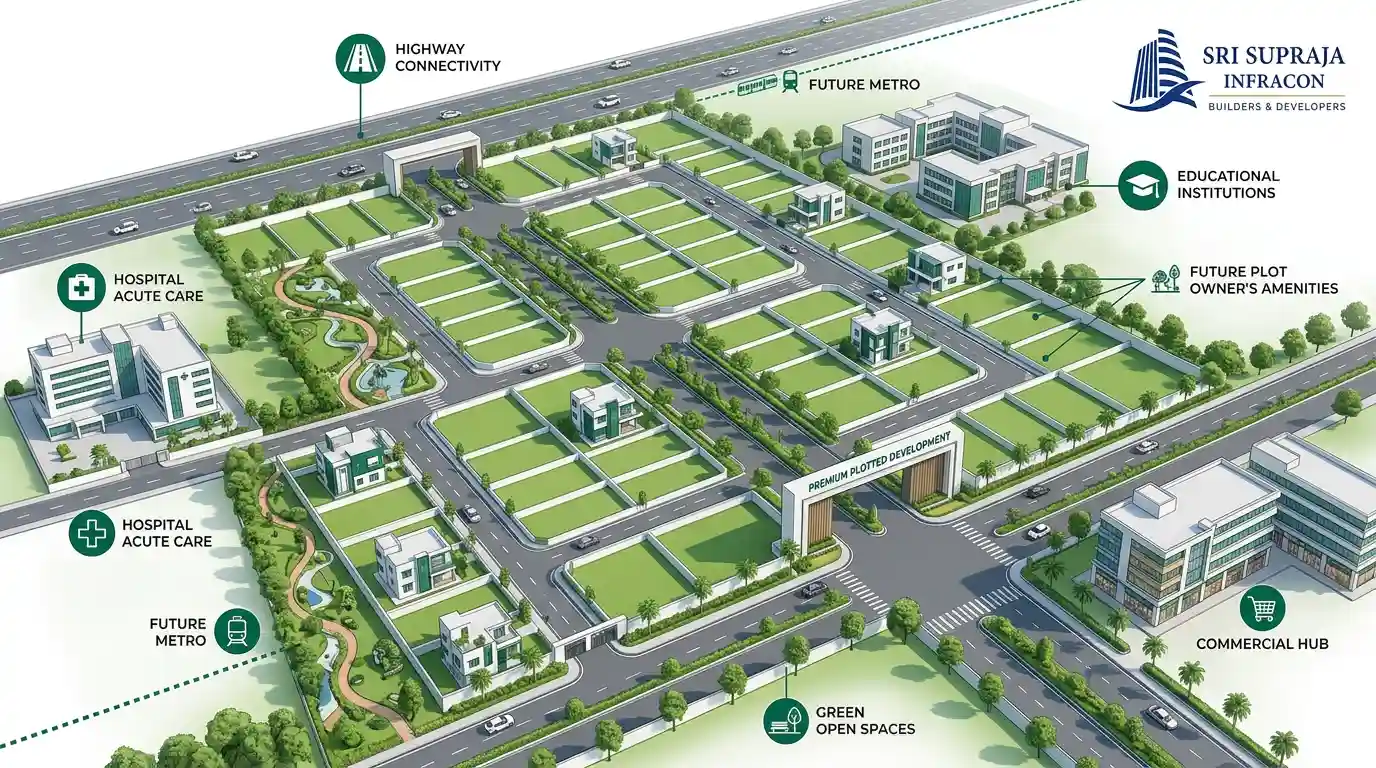
Infrastructure and Community Planning
10. Internal Roads and Plot Demarcation
Well-planned internal roads and clearly organized plots contribute to ease of movement and the overall character of a plotted community.
11. Water, Electricity and Drainage Planning
Buyers may understand the arrangements for utilities, drainage, street lighting and other infrastructure according to the stage of development.
12. Green Spaces and Community Features
Open areas, landscaping, recreation and community amenities can add to the usability and appeal of a development.
Developer and Project Experience
13. Explore Completed and Ongoing Projects
Previous and ongoing developments provide useful context about a developer's scale, planning approach and execution experience.
14. Understand the Project Vision
A clear discussion with the project team can help buyers understand what is completed, what is under construction and what is planned.
15. Consider Customer Support
Registration assistance, project updates, maintenance communication and post-sale support can contribute to the overall ownership experience.
You can explore current developments on the Sri Supraja Infracon projects page.
Financial Planning
16. Understand the Complete Cost
Along with the plot price, buyers can consider applicable registration charges, maintenance, development-related charges where relevant and their own future construction plans.
17. Understand Payment Options
Booking amount, payment schedule, registration timeline and promotional plans can be compared according to the buyer's financial preference.
18. Plan for the Intended Use
Someone planning a future home may value plot dimensions, road width and building suitability differently from a buyer considering a weekend home or longer-term land holding.
Site Visit Considerations
A site visit brings the Plot Buying Checklist to life. It allows buyers to experience the route, surrounding area and project development rather than relying only on maps or photographs.
- Approach road and travel time
- Nearby landmarks and development
- Internal road network
- Plot location and dimensions
- Land level and surroundings
- Infrastructure progress
- Community planning and amenities
The project team can use the visit to explain available plots, layout features, development status, payment options and registration process.
19. Compare the Overall Proposition
After understanding the individual factors, compare them together. A lower price does not automatically make one plot better, just as a premium feature alone does not define the entire investment. The best fit depends on the buyer's purpose, budget, preferred location and time horizon.
20. Choose According to Your Own Goal
Some buyers prioritize future home construction, some prefer a weekend-home environment, and others focus on long-term location growth. A useful checklist should ultimately help identify the plot that aligns with that personal objective.
Final Thoughts on the Plot Buying Checklist
A Plot Buying Checklist works best as a positive comparison tool. It brings location, planning, infrastructure, developer experience, costs and future usability into one clear view.
When buyers understand these elements and visit the project personally, they can have more meaningful discussions with the project team and choose a plot that fits their plans with greater confidence.
Explore Premium Projects
Related Blogs
Plot Site Visit Checklist: What to Inspect Before You Decide
A structured site visit helps plot buyers connect maps and documents with actual access, boundaries, infrastructure and surroundings.
Weekend Home Investment Guide: What Plot Buyers Should Consider
A weekend home can combine personal use with long-term property ownership, but buyers should evaluate access, infrastructure, maintenance and future usability carefully.
Sadashivpet vs Sangareddy for Plot Investment: 2026 Buyer Comparison
Compare Sadashivpet and Sangareddy through connectivity, development maturity, institutional growth and plotted-development opportunities west of Hyderabad.
Looking for DTCP & RERA Approved Plots?
Explore premium plotted developments by Sri Supraja Infracon across Hyderabad growth corridors.